This post may contain affiliate links, including those from Amazon Associates. If you make a purchase through these links, I may earn a commission at no additional cost to you. Learn more about our affiliate policy.
There is something grounding about gathering twigs from the earth and turning them into a symbolic circle you can hold. A twig wreath carries the spirit of the natural world in its shape.
It honors cycles, thresholds, and the quiet magic that comes from working with your hands. What’s best is making one is simpler than you may think. You gather, you weave, you tie, and suddenly the materials in front of you begin to feel alive in a new way.
A witchy twig wreath with dried flowers is one of the easiest witchy nature crafts to begin with. The materials are forgiving, the structure is loose, and there is no need for perfection.
These kinds of wreathes are perfect for all year earthy decor, or as a special addition to your winter solstice decorations.
You can keep it wild or shape it into something delicate. You can make it symbolic or purely beautiful. The wreath becomes whatever you need it to be. In this post you will learn how to build four styles, each one designed to match a different mood or aesthetic.
Below are ideas for a wild freeform version, a radiant sun wreath, crescent moon or a minimal hoop wreath with flowers gathered at the bottom.

Working with Dried Flowers
Dried flowers bring texture and color to any of the wreath styles. They also hold sentimental value because many people gather or dry them from meaningful moments. Even small or imperfect stems look beautiful when placed thoughtfully.
When preparing your flowers, trim stems to two or three inches so they nestle easily into the wreath. Keep delicate pieces aside until the end so you can place them where they will be supported. Flowers with strong shapes, like strawflower or statice, anchor the design. Feathery grasses, herbs, or tiny pods soften the edges.
Read the step-by-step guide on drying flowers and herbs for crafts here.
Choosing your botanicals can become a personal ritual. Some people choose based on color, others choose based on symbolism. Lavender brings calm. Rosemary brings protection. Mugwort brings intuition. Seed pods hint at possibility. Let your own associations guide what you gather.
Materials You’ll Need
Gathering materials is part of the ritual. It slows your pace and invites you to notice what the season is offering. Most items can be found in your yard, on a walk, or from dried flowers you already have at home.
To guide your foraging, here is an in depth tutorial on foraging different twigs for wreathes PLUS a tutorial for a simple hoop wreathe with flowers at the end:
What You’ll Need
- Flexible twigs or small branches
- Floral wire, thin jute twine, or natural cord
- Pruners or garden shears
- Dried flowers, herbs, grasses, or seed pods
- Optional ribbon or fabric strips
- Optional crystals, charms, feathers, or found objects
- Hot glue for delicate stems if needed
These materials create a foundation that is both sturdy and expressive. Working with twigs teaches you to trust the natural curve of the branch. Working with dried flowers teaches you to move gently and let softness guide your choices.
If these projects inspire you, you may also be interested in this post on beautiful twig crafts for witchy decor.
Classic Wild Twig Wreath

This version embraces the natural shape of the twigs. It feels untamed and witchy, like something you would find hanging on a cottage door deep in the woods. The process is intuitive and works well when you want your craft to feel visceral and expressive.
What You’ll Need
- A bundle of flexible twigs
- Jute twine or floral wire
- Dried flowers and herbs
- Pruners
Instructions
- Bend a handful of twigs into a rough circle. The shape does not need to be perfect. Let the branches curve as they want to and allow some of the ends to stick out as you work your way around.
- Layer additional twigs over the first circle. Wrap twine or wire around the base wherever the shape needs support.
- Continue adding twigs until the wreath feels full enough. You can leave some ends sticking out to create a wild silhouette.
- Gather dried flowers into small clusters. Tuck them between the twig layers and secure them with twine if needed.
- Add herbs, seed pods, feathers, or grasses to fill empty spaces. Move slowly and adjust until the wreath feels balanced.
This style celebrates imperfection. It looks handmade in the best way. It becomes a reminder that beauty exists in the irregular and the natural.
I love this easy tutorial for using a soup pot to create a rustic and wild twig wreathe:
Radiating Sun Wreath

A sun wreath carries warm, protective energy. The branches radiate outward like light, and the flowers gather in the center or along the inner ring. This style works especially well in winter or early spring when the symbolism of the sun feels comforting.
What You’ll Need
- Straight twigs in similar lengths
- A small inner ring or circle of twigs
- Floral wire
- Dried flowers in warm or neutral tones
- Optional symbolic pieces such as charms or ribbon
Instructions
- Form a small inner ring using flexible twigs or use a metal hoop. Wrap with twine until it feels stable.
- Lay straight twigs around the ring like rays of sunlight. Attach each twig securely with wire.
- Continue adding twigs until the wreath looks full and balanced. The rays can be symmetrical or varied depending on the mood you want.
- Add dried flowers around the inner ring. Choose botanicals in warm colors such as rust, cream, or deep gold for a solar feel.
- Adjust the rays as needed. Some may extend farther, while others can remain shorter to keep the wreath interesting.
This wreath becomes a bright presence on your wall. It feels symbolic and grounding. It reminds you that warmth returns even in the darker seasons.
Here is a full tutorial for a sun wreathe so you can follow along, just add in your dried flowers as you’re creating it:
Crescent Moon Twig Wreath
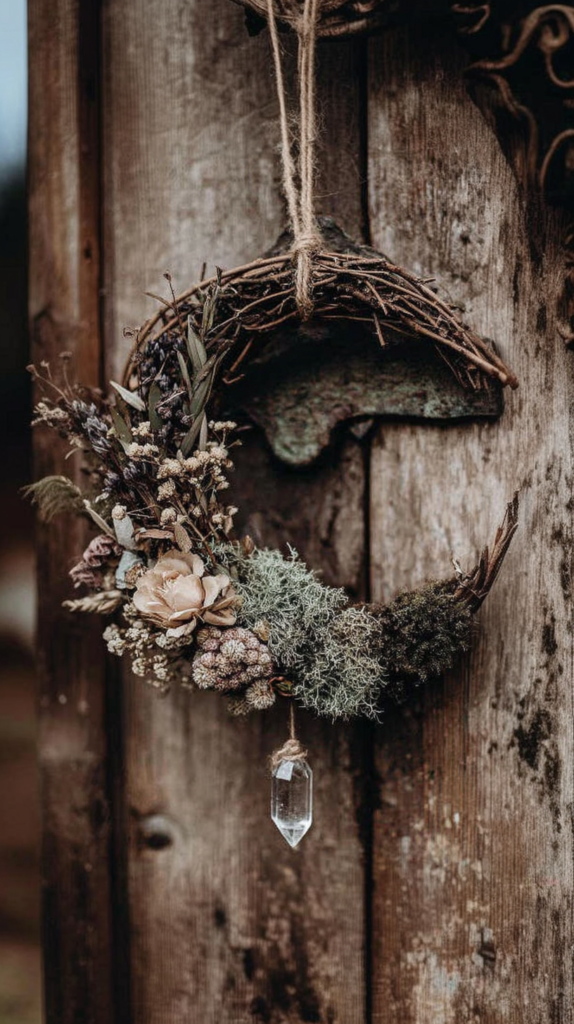
A crescent moon wreath carries a quiet, mystical presence. Its shape feels protective and symbolic, almost like a doorway into intuition and softer rhythms. The curve of the moon works beautifully with twigs and dried flowers. It becomes an enchanting piece to hang above a bed, near an altar, or anywhere you want a touch of lunar energy.
What You’ll Need
- A twig wreath base or a pre-made circular wreath
- Pruners or heavy scissors
- Floral wire or sturdy twine
- Dried flowers, herbs, and grasses
- Optional crystals, charms, or lightweight hanging elements
- Optional ribbon for suspension
Instructions
- Begin with a circular wreath base. If you are using a twig base you made yourself, make sure it is tightly bound. If you are using a store-bought twig wreath, ensure it feels firm enough to reshape.
- Trim away a portion of the wreath so the remaining shape forms a crescent. Cut through the twig bundles carefully, removing the top arc until the curve resembles the moon’s silhouette.
- Bind the newly exposed ends with wire or twine. Secure them tightly so the wreath holds its crescent shape without separating. You may need to wrap additional twigs along the inner edge to reinforce the curve.
- Begin decorating by placing dried flowers along one side of the crescent. Many people choose to cluster them near the bottom point or along the thickest part of the curve. Choose whatever arrangement feels balanced.
- Add grasses, herbs, and smaller botanicals to fill in gaps. Keep the natural arc visible. The empty space is part of the design and gives the wreath a feeling of breath and movement.
- For a witchy touch, tie or wire a few crystals or charms near the top point of the moon. They can dangle slightly or rest against the wreath depending on the look you want.
This style feels symbolic and deeply personal. The moon shape can reflect intuition, cycles, and the soft light that guides you during quieter seasons. It creates a gentle focal point that feels both magical and calming.
Here is a full tutorial for a this crescent moon twig wreath project from Juniper Rose:
Minimal Twig Hoop Wreath with Flowers at the Bottom
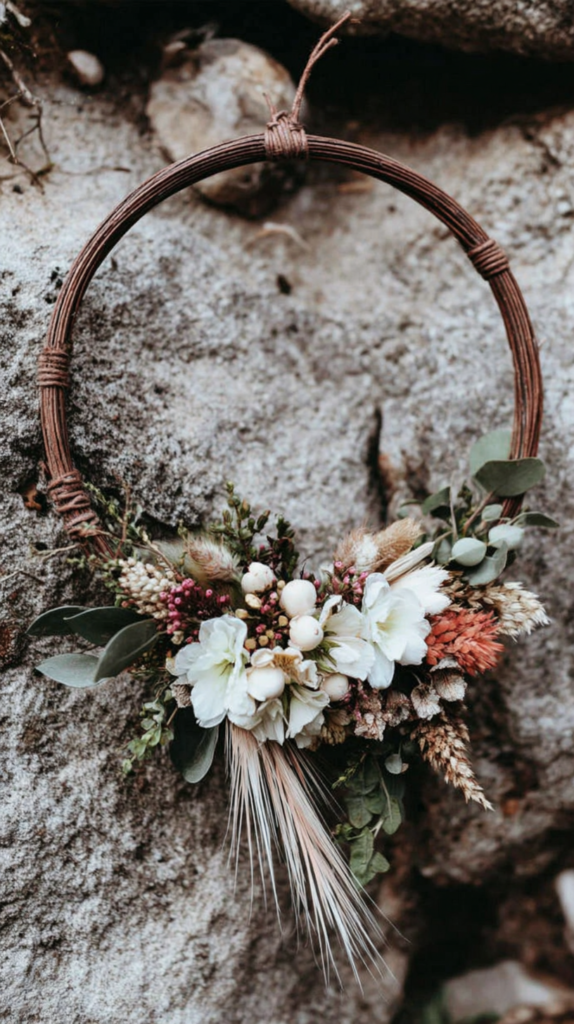
This style is clean and balanced. It works well in small spaces and creates a focal point without overwhelming the room. The hoop gives structure while the floral cluster adds softness and movement.
What You’ll Need
- A smooth twig hoop or wooden hoop
- Dried flowers and grasses
- Twine or floral wire
- Optional small sprigs of herbs or delicate seed pods
Instructions
- Create a smooth circular hoop. If using twigs, bend and bind them into a clean circle. If using a wooden hoop, wrap it with thin twigs for added texture.
- Gather dried flowers into a compact bundle. Let some pieces extend naturally to create flow.
- Secure the bundle at the bottom of the hoop with wire or twine. Wrap tightly so the flowers feel anchored.
- Add smaller sprigs on each side of the main cluster to soften the transition between flowers and hoop.
- Adjust the arrangement until it feels airy and balanced. Minimal wreaths often shine through restraint.
This wreath works beautifully as altar decor, in entryways, or as a seasonal piece that shifts with the flowers you choose. It invites calm simplicity.
Witchy Touches and Symbolic Additions
A twig wreath becomes witchy when it holds meaning. You can weave intention into it the same way you weave the branches. If it feels right, add a single ribbon trailing down to represent a spell thread or a wish. Tuck in a small crystal or stone that holds energy for you. Tie in charms shaped like moons or stars. Use herbs that feel protective or grounding.
You can also lean into seasonal meaning. In winter, add evergreen sprigs or small pinecones. In spring, add budding branches. In summer, dried wildflowers bring brightness. In autumn, seed pods and warm-toned petals create a harvest mood.
Your wreath can change with the seasons or remain constant. Some people like to refresh the flowers every few months. Others let the wreath age naturally as a reflection of time passing.
Display and Care
Twig wreaths are lightweight and easy to display. A simple nail, hook, or length of ribbon can hold them. They look beautiful indoors on walls, doors, mirrors, or shelves. If you choose to hang the wreath outdoors, place it in a sheltered area to protect delicate botanicals from wind or rain.
Dust gently with a soft brush now and then. Dried flowers are fragile and benefit from gentle handling. If any pieces loosen over time, they can be tucked or tied back into place.
Closing Reflection
A twig wreath is more than a craft project. It is a circle woven from presence and natural materials, made with your own hands. The process of gathering and assembling becomes a way of returning to yourself, even if only for a quiet hour in your day. When you hang your wreath, it carries that energy with it. It becomes a small reminder that you can create beauty from the simplest things, and that nature is always offering something to work with.
Whether you choose the wild, radiant, or minimal style, let your intuition lead the way. You may find that the wreath shapes itself as much as you shape it. That is part of the magic.