This post may contain affiliate links, including those from Amazon Associates. If you make a purchase through these links, I may earn a commission at no additional cost to you. Learn more about our affiliate policy.
Every creative soul collects little treasures. Those bits of twine, dried flowers, ribbons, paint jars, and found nature objects that hold potential.
But without a system to hold it all, that beauty can quickly turn into clutter. What should feel like a collection of inspiration starts to feel like chaos.
Creating a nature craft supply storage box is a way to change that energy. This organization gives your materials a home that feels sacred, intentional, and alive.
When you design a box that reflects your creative rhythm, it becomes a grounding ritual in itself. The best part is that it doesn’t have to cost much.
With a few thoughtful choices and some resourceful styling, you can create a beautiful, functional craft box for under $50.

Choose Your Container Wisely
Your “box” doesn’t have to be a traditional container. What matters is that it feels beautiful, tactile, and easy to move around. Look for something that speaks to your aesthetic, whether that’s rustic, bohemian, vintage, or simple and clean.
Here are a few ideas that work beautifully:
- A vintage makeup caddy or train case with built-in compartments for brushes, twine, and paint jars. These often cost under $20 at thrift shops and add nostalgic charm.
- A wooden wine crate lined with linen or burlap. Its open design makes it perfect for jars, bottles, and small bundles of herbs.
- An old sewing box or picnic basket with sections or lift-out trays, ideal for organizing mixed materials.
- An upcycled wooden drawer or toolbox that you can sand, paint, or refinish to fit your color palette.
- A sturdy hatbox or decorative cardboard box for lightweight materials like paper scraps, lace, or dried petals.
- A metal breadbox or tin for a touch of vintage character that also keeps your supplies dust-free.
The key is to find something that feels personal that becomes a companion you’ll return to again and again.
Prepare and Style the Box

Once you’ve found your base, give it some love. The process of transforming the container is part of the creative ritual—it turns a simple box into a piece that reflects your artistry.
Start by cleaning it thoroughly and sanding any rough edges. If you’re using wood or metal, a gentle wipe of natural oil or a thin coat of muted paint can make it feel new again. Earthy tones like clay, sage, or cream give a natural finish that fits seamlessly with other décor.
Line the bottom with a piece of linen, cotton, or burlap. The soft fabric not only protects your materials but also creates a tactile, organic base.
You can secure the fabric with a thin layer of Mod Podge for a more permanent, polished liner, or simply cut it to size and leave it loose for a softer, removable feel.
Inside, divide the space with smaller jars, tins, or trays so your materials stay easy to find.
A few ideas include:
- Recycled glass jars or candle holders for buttons, dried petals, or small trimmings.
- Wooden trays or cutlery organizers to separate paints, brushes, or herbs.
- Small ceramic bowls for beads, pins, or clips.
- Vintage tins or teacups for holding twine or ribbons.
To finish, add a simple decorative touch that feels like you. Tie a small sprig of rosemary or lavender to the handle with twine. Attach a paper tag or handwritten label. These details turn everyday organization into something beautiful and personal.
Fill It With Natural, Everyday, and Thrifted Supplies

Now comes the fun part: filling your box with creative treasures! Keep it simple, intentional, and in tune with what you actually use. This isn’t about collecting more; it’s about curating a small library of materials that feel good to work with.
Nature-Based Supplies
- Dried flowers, herbs, and seed pods gathered from your walks.
- Pressed leaves, petals, and small twigs.
- Smooth stones, feathers, pinecones, or acorns (cleaned and dried).
- Natural twine, raffia, or jute string for tying or hanging.
- Beeswax candles or wax scraps for sealing and ritual crafting.
Everyday Craft Essentials
- Small paintbrushes and watercolor or acrylic paints in earthy tones.
- A simple set of scissors, glue stick, and pencil.
- Paper scraps, handmade cards, or envelopes to reuse in projects.
- Air-dry or natural clay for small sculpting or charm-making.
- Fabric remnants like linen, cotton, lace, or muslin for layering and texture.
- A small notebook or sketchpad for jotting ideas and planning projects.
Thrifted and Repurposed Treasures
- Vintage buttons, beads, or jewelry pieces for embellishment.
- Wooden spools, clothespins, or candle lids for structure.
- Glass jars or apothecary bottles for herbs and small materials.
- Old metal tins or boxes for storage dividers.
- Wicker baskets or small drawers for stacking or sorting.
You can find most of these materials secondhand or for just a few dollars. The secret to staying under $50 is to blend what you already have with a few new or thrifted additions. Over time, your box will evolve naturally, becoming a living archive of your creative journey.
Making It Feel Magical
Beyond practicality, let your box carry a sense of presence. You might light a candle or play soft music while you organize your materials.
You could add a small charm, pressed flower, or crystal to the box as a symbol of creative intention. These little details invite a feeling of connection every time you open it.
When your materials are stored in a way that feels beautiful, the creative process flows more easily. The ritual of opening the box, touching each object, and choosing what to work with becomes grounding and centering. It reminds you that creativity doesn’t have to be messy or chaotic, it can be calm, intuitive, and filled with care.
Keeping It Accessible
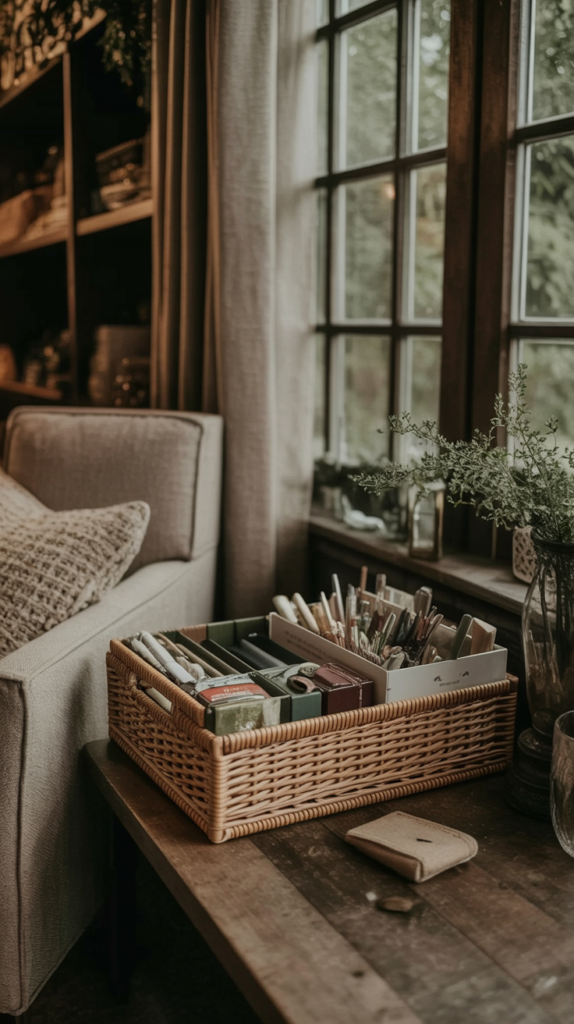
Your craft box should live somewhere within reach like on a shelf near your creative corner, under a window, or on your desk. Avoid tucking it away in a closet where it’s forgotten. The more visible it is, the more likely you’ll use it.
If you’re limited on space, stack it beneath a side table or beside your chair so you can easily pull it out when inspiration arrives. Having your supplies gathered and ready removes the friction that often keeps creative people from starting.
A box like this makes it simple to sit down and make something on a whim, even when time is short.
Reflection
Building your own craft supply box is about more than tidying up—it’s about giving your creativity a home. When you create order with intention and beauty, you open the door for inspiration to visit more freely.
Every time you lift the lid, you’ll be greeted by textures, colors, and materials that remind you of your connection to nature and your own ability to create. You might start to see your supplies differently—not as random bits and pieces, but as sacred ingredients for your next idea.
Your box will evolve with you. Over time, it will gather stories, moments, and the quiet fingerprints of your process. It will become a small altar to creativity itself, a container for not only what you make, but who you are becoming.