This post may contain affiliate links, including those from Amazon Associates. If you make a purchase through these links, I may earn a commission at no additional cost to you. Learn more about our affiliate policy.
There is a moment in early summer when a bundle of lavender hangs upside down in a warm kitchen and the whole room changes. The scent gets into the curtains, the wooden spoons, the back of your throat, and an ordinary afternoon starts to feel like a ceremony.
Your hands already know what to do with a stem of lavender. This is not a new skill to learn, it is an old one to come back to.
In This Post, You’ll Find
- A shared supply list built from thrifted jars, foraged stems, and cheap pantry staples
- How to dry lavender properly so your batches never mold or fade
- Eight lavender crafts that batch well and sell well at a market table
- Woven lavender wands made the old ribbon way
- Sachets, salts, and oils that cost pennies and move quickly
- Honest safety notes on candles, infused oils, and bath products
- Pricing and table styling for your first market
Why These Lavender Crafts Sell Without You Having To Sell Them
Lavender does most of the work for you. People walk past a table, catch the scent, and stop before they have decided to stop.
You are not competing on cleverness here. You are offering something that reaches people through their nose and their memory before it ever reaches their wallet.
Most of these pieces cost well under two dollars each to make. If you are already making affordable witchy crafts to sell at magical markets, lavender slides in beside them without adding much to your supply budget.
What You’ll Need For Almost All Of These
Gather these once and you can make nearly the whole list. Start with what you already have, then fill the gaps at a dollar store, a thrift shop, or a bulk herb supplier.
- Dried lavender buds, bought in bulk by the pound rather than in small craft store packets
- Fresh lavender stems, grown or foraged, needed only for the woven wands
- Small glass jars and bottles, thrifted, saved from the recycling bin, or bought cheap by the case
- Muslin bags or scrap fabric squares, cut from old linen, cotton shirts, or worn napkins
- Narrow ribbon, roughly a quarter to a half inch wide
- Epsom salt and coarse sea salt, the largest and cheapest bags you can find
- A neutral carrier oil such as sunflower, sweet almond, or plain olive oil
- Lavender essential oil, where one small bottle stretches across dozens of pieces
- Kraft tags, twine, and a fine pen or stamp for labeling
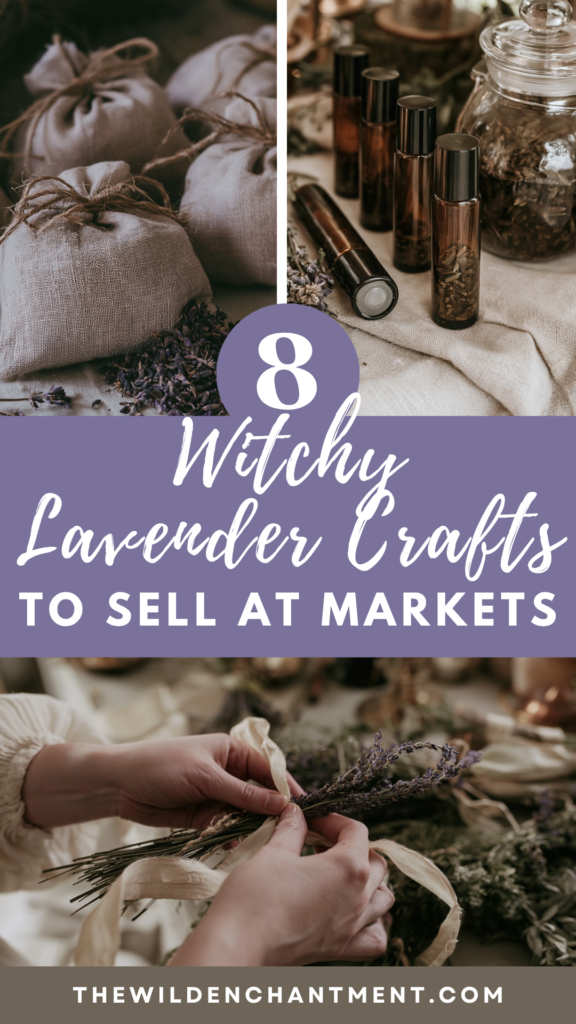
Dry Your Lavender Before Anything Else
Everything on this list depends on lavender that is genuinely, completely dry. Leftover moisture is what ruins sachets, spoils infused oil, and grows mold inside a sealed jar.
- Cut your stems in the morning, once the buds have opened but before the flowers blow out, when the scent sits at its strongest.
- Strip the lower leaves and gather the stems into small bundles, none thicker than you can circle with your thumb and finger.
- Bind each bundle with twine or a rubber band, snug enough to keep holding as the stems shrink.
- Hang them upside down somewhere dark, dry, and airy for two to four weeks.
- Roll a single bud between your fingers to test. It should crumble cleanly, with no softness or give left in it.
It is worth learning to dry flowers and herbs for decor, crafts, and ritual properly once, because every batch after that gets easier.
Woven Lavender Wands
This is the oldest craft on the list and the one people reach for first. The stems bend back over the flower heads and get woven shut with ribbon, so the buds stay caged inside and release scent for years whenever the wand is squeezed.
- Strip the leaves from 15 to 25 fresh stems, keeping an odd number so the weave alternates correctly.
- Line the flower heads up evenly and band the bundle just below the buds.
- Tie one end of a yard and a half of ribbon at the band, leaving the long tail free to weave.
- Bend the stems back over the flower heads one at a time, scoring each bend gently with your fingernail so it folds instead of snapping.
- Weave the ribbon over and under the stems in one direction, pulling snug as you go, since the buds shrink as they dry.
- Wrap the neck, tie it off, and trim the stem ends level.
Fresh stems are not optional here. Dried ones crack the moment you try to bend them.
Lavender Dream Sachets
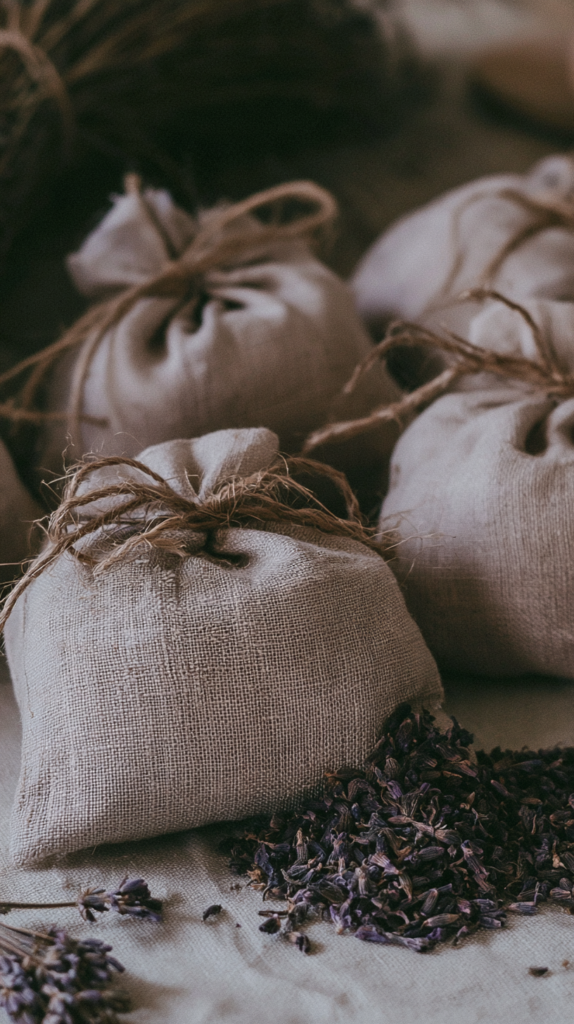
Cut squares of old linen or cotton with pinking shears, fill each with a generous spoonful of buds, and tie the corners closed with twine. They cost almost nothing and they are the easiest thing on your table to say yes to. You can also purchase premade muslin bags and fill them with lavender buds.
Add a pinch of dried rose or chamomile if you have it, and a kraft tag telling buyers where to tuck it. Under a pillow, in a drawer, in the glove box of a car that smells like nothing good.
Lavender Salt Ritual Jars
Layer coarse sea salt and Epsom salt into a small thrifted jar, stirring dried buds and a few drops of essential oil through as you go. The layers read as intentional, and intentional is what people are paying for.
Bath products count as cosmetics in the United States, so list your ingredients on the label from most used to least. The same logic behind witchy spell jar ideas that sell well online applies to every layered jar you make.
Lavender Infused Oil Rollers
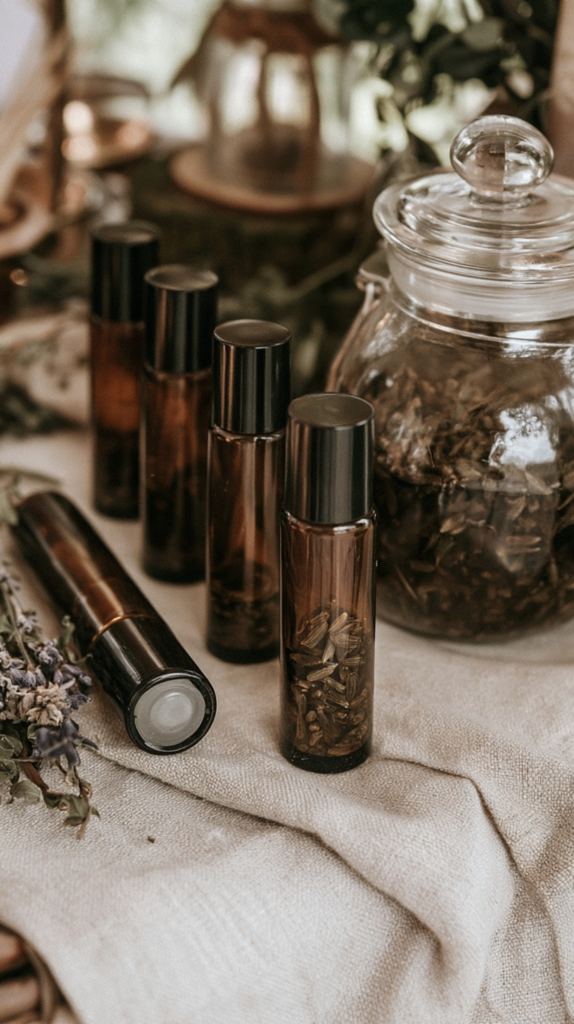
Fill a small jar two thirds full with dried buds, cover completely with carrier oil, and let it sit somewhere warm for two to four weeks, shaking it when you remember. Strain it through cloth and funnel it into little roller bottles.
Only ever use fully dried lavender for this. Any moisture left in the flowers will spoil the whole batch, and a moldy oil is not a mistake you want to sell.
Lavender Beeswax Candles
Melt beeswax or soy into thrifted glass jars, add lavender essential oil once the wax has cooled slightly off the heat, and set the wick with a clothespin laid across the rim. The scent comes from the oil, not from the buds.
This is the one place to be firm with yourself. Dried buds sitting near a lit wick are a real fire hazard, and botanical candles have been recalled over exactly this, so press a few buds flat against the glass below the wax line or leave them out entirely.
Pressed Lavender Frames
Press single stems flat between book pages for two weeks, then mount them on cream cardstock inside a thrifted frame. Small frames sell better than large ones, because they fit in a bag and in a budget.
Leave real negative space around the stem. The empty room around it is what makes it read as art rather than a craft project.
Here is a full tutorial from Patiodreams:
Lavender Door Bundles
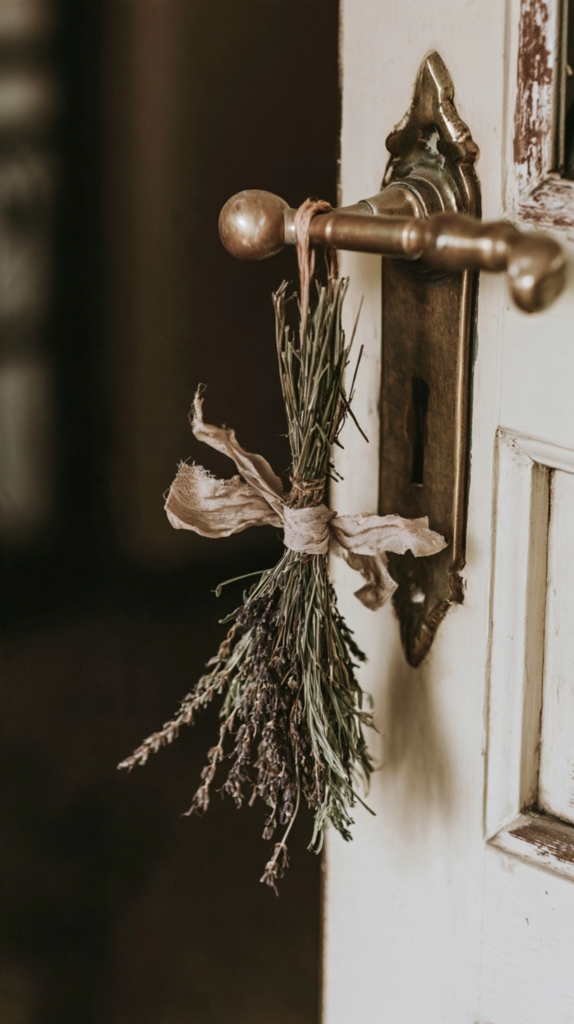
Bind a small handful of dried stems with wire, wrap the stem ends in ribbon or twine, and add a sprig of eucalyptus or a cinnamon stick if you have one. These hang on a door handle, a bedpost, or a rearview mirror.
Make these in three sizes and price them accordingly. Bundles are where a browsing customer becomes a buying one, because there is always a version they can afford.
Lavender Linen Mist
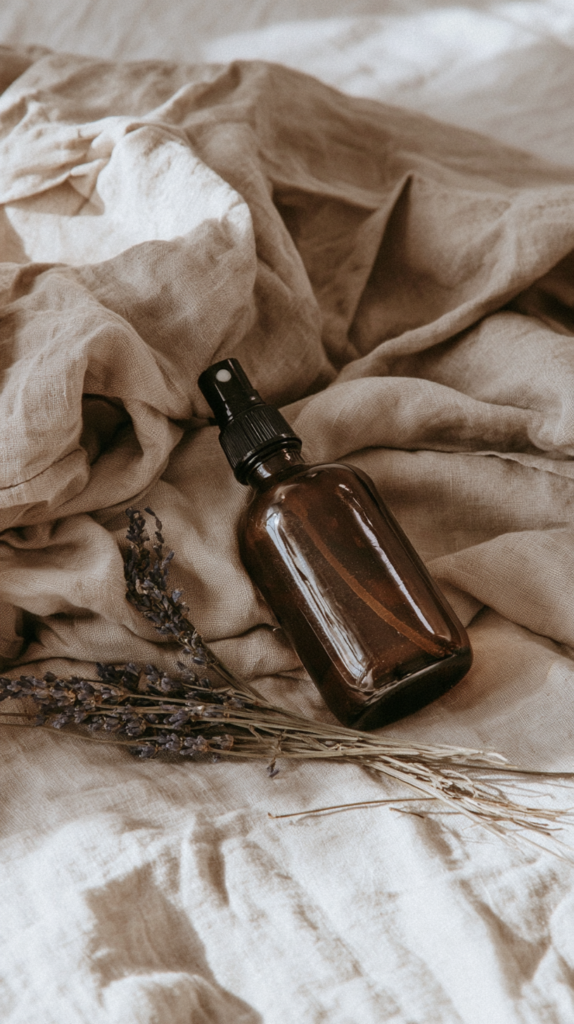
Combine distilled water, a splash of witch hazel, and lavender essential oil in a small amber spray bottle, then shake before every use. Tell buyers plainly that it separates, because a product that behaves as promised builds more trust than one that seems perfect.
Charge a little more for this one. It is the piece people finish and come back for, which is exactly what you want stocked when you build a magical herbal apothecary on a budget.
Pricing And Styling Your Market Table
Price by what the piece is worth to the person carrying it home, not by what the materials cost you. Sachets at five dollars, wands at eighteen, everything else stacked in between.
Build height with wooden crates under a linen cloth. A flat table reads as a garage sale, and a table with levels reads as a shop.
Keep one bundle of lavender loose and uncovered near the front edge. Let people touch it, because the ones who touch it are the ones who buy.
Bring cards with your shop name on them. If you eventually start an Etsy shop for witchy crafts, those cards are how a single market keeps paying you for months.
The Table Is Not Really The Point
Something happens between drying a bundle in a dark room and handing it to a stranger who lifts it to her face. You made a small, fragrant, useful thing with your own hands, and someone chose it.
That is the part worth keeping. The money is real and it matters, and it is still the smaller half of what you carried home.
From Wild Enchantment
Sell What Your Hands Create
The complete companion for turning your handmade crafts into real income at markets and online. What to make, what to charge, and where to sell it.
Get the Kit