This post may contain affiliate links, including those from Amazon Associates. If you make a purchase through these links, I may earn a commission at no additional cost to you. Learn more about our affiliate policy.
There is a particular hush that settles into a house in late October, when the light goes amber and the windows fog at the corners. Primitive autumn decor lives inside that hush, in worn wood and dried herbs and objects that look like they passed through many hands before reaching yours.
Long before autumn home decor became a styling category, it was a practice of protection. Every gourd on the sill and every bundle of herbs above the door had a job to do.
In This Post, You’ll Find
- Eleven primitive autumn decor ideas pulled from old household folk magic
- Simple threshold charms for doorways, windowsills, and hearths
- Ways to use dried herbs, gourds, and worn wood without buying anything new
- Protective objects that read as ordinary decor to anyone who does not know
- Small rituals that turn seasonal styling into seasonal practice
- A grounded color palette rooted in rust, walnut, and dried moss
Why Primitive Autumn Decor Feels Different From Trend-Driven Autumn Home Decor
Primitive style is not about looking old. It is about keeping things that were made to be used, then using them until they soften.
Folk magic worked the same way. The charm was rarely separate from the household object, it was the household object, quietly doing double duty.
That is why this look still lands so heavily in a modern room. It carries the weight of function, and function is exactly what most seasonal decorating has lost.
1. Hang a Braided Corn Dolly On the Door
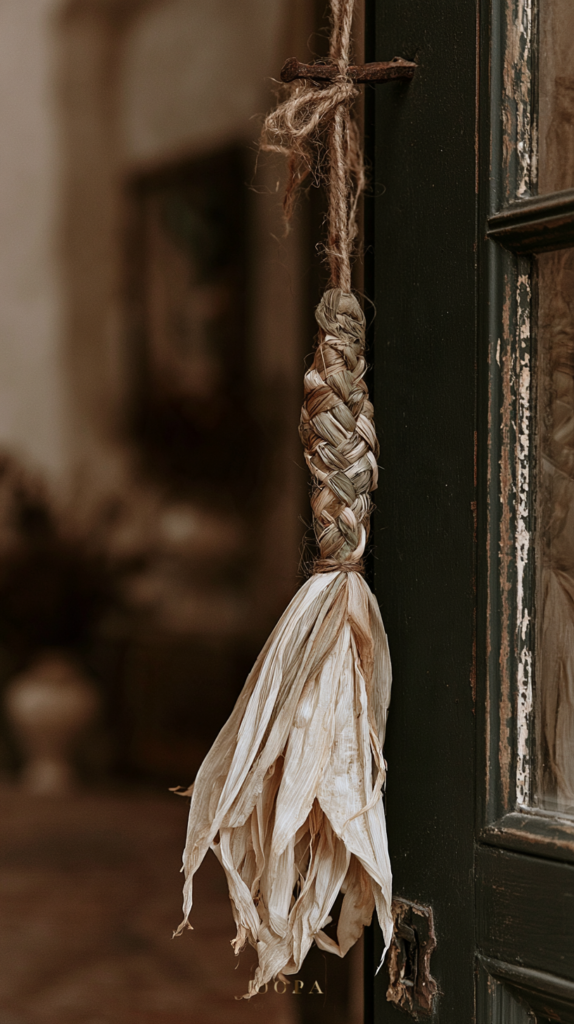
The last sheaf of the harvest was braided into a small figure and kept indoors through winter, holding the spirit of the field until spring planting came around again.
Hang yours above the doorway or on a kitchen nail, low enough that you brush past it when you carry groceries in. Cornhusks soften with humidity and darken through the season, which is exactly the point.
If you want it to do more than decorate, stuff the body with rosemary or mugwort before you tie it off. That was the old way of turning a harvest keepsake into a household ward.
2. Fill Old Glass Jars With Dried Herbs
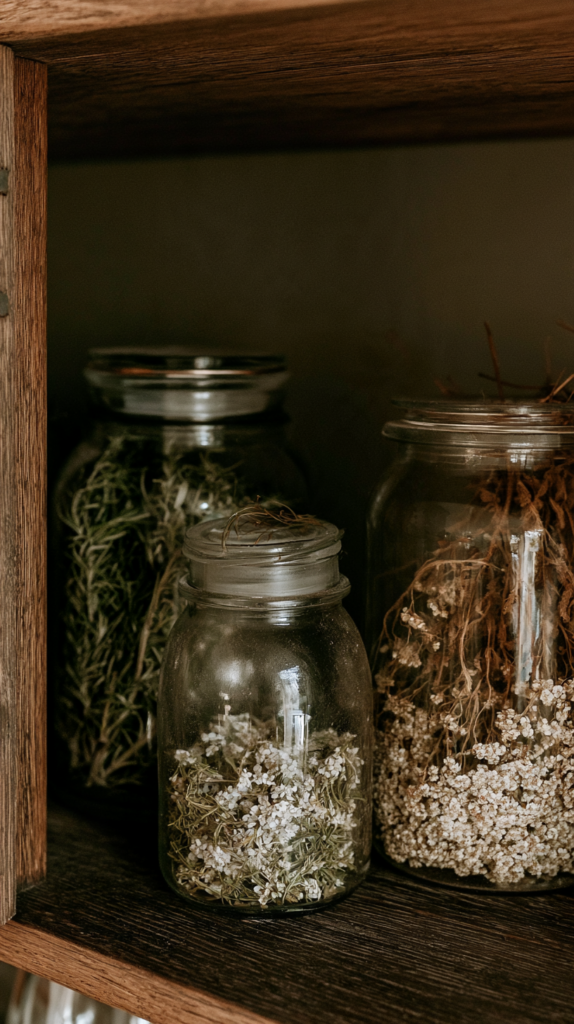
Rosemary, mugwort, yarrow, and sage lived in the kitchen because they were needed there, not because they photographed well on a shelf.
If you dry flowers and herbs yourself, the color holds longer and the scent stays true for months rather than weeks. This is the quiet beginning of a home apothecary cabinet, whether or not you ever call it that.
Use mismatched jars with cloudy glass and chipped lids. Set them where the late afternoon light passes through, and the whole row turns amber for about twenty minutes a day.
3. Keep a Bowl of Unshelled Nuts and Acorns Out
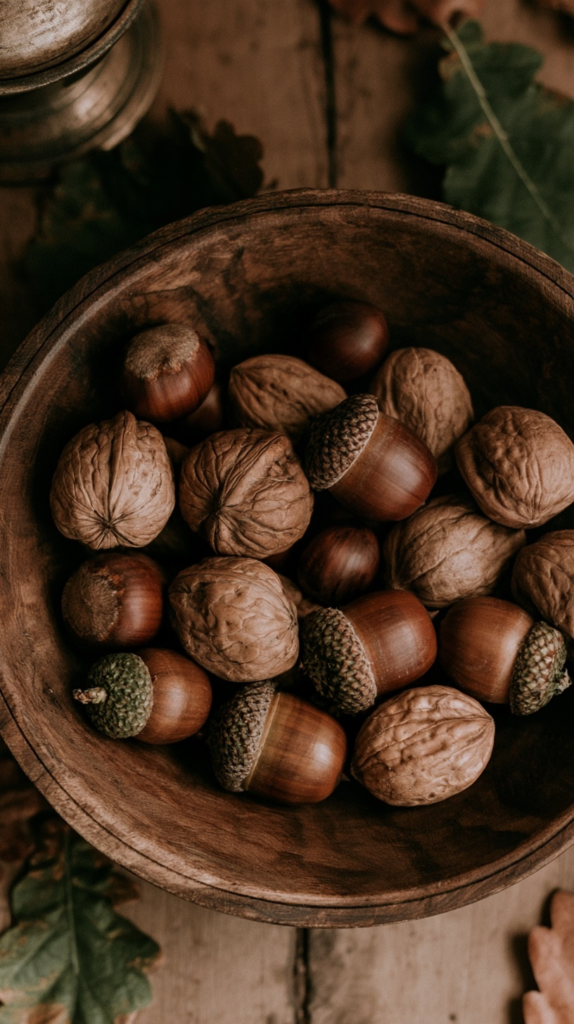
Acorns were carried in pockets for protection and set on windowsills to keep lightning away from the house, a piece of folk logic that stayed alive for centuries.
A shallow wooden bowl of walnuts, hazelnuts, and acorns reads as abundance in any room, and it costs nothing but a walk.
Leave them unshelled and unpolished. Half the charm is that they look gathered rather than bought.
4. Make a Grapevine Wreath That Looks Half Wild
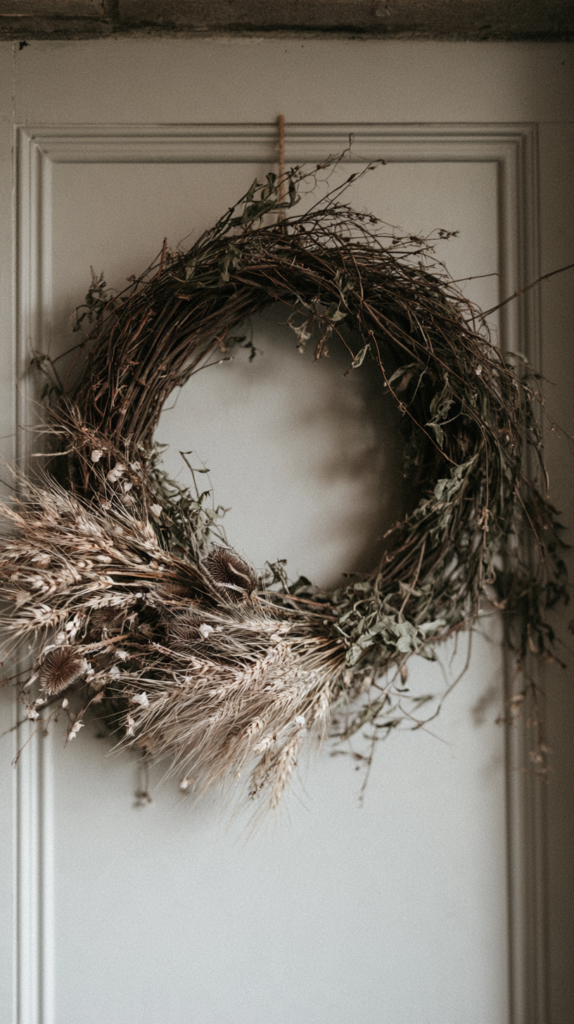
Skip the tidy, symmetrical version. Old wreaths were bent from whatever grew at the field edge, and they showed it in every crooked loop.
A witchy twig wreath with dried flowers tucked into the gaps carries the same energy for far less money. Leave the ends loose and let it look like something the wind made and then abandoned.
Wire in wheat, oak leaves, or seed heads as you find them. A wreath that changes through the season is more primitive than one finished in a single afternoon.
5. Burn Beeswax Tapers in Rusted Iron Holders
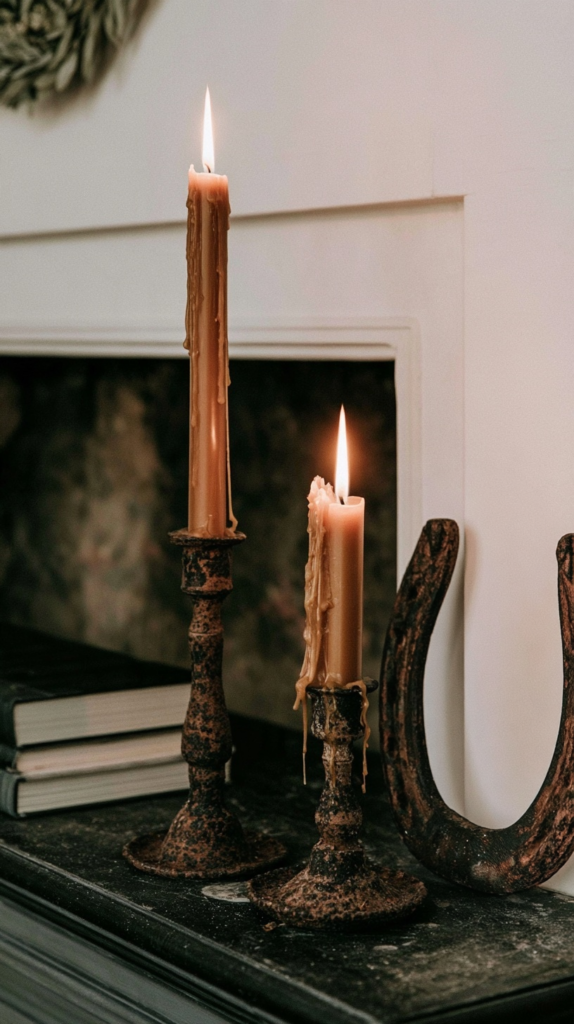
Iron was the oldest protective metal in European household magic, hung over doors, driven into thresholds, and buried under hearthstones.
Rusted candle holders, a dish of old square nails, a horseshoe above the entry. Each one reads as rustic autumn styling and functions as a protection charm at the same time.
Beeswax matters here too. It burns warm gold rather than white, and the honey smell fills a small room in about ten minutes.
6. Drape Faded Quilts Over Every Chair Back
Worn textiles do the heaviest lifting in a primitive room. Look for hand stitching, sun fading, and repairs that nobody bothered to hide.
Rust, walnut, dried moss, and deep mustard are the tones that hold up against autumn light without tipping into costume.
One quilt over a chair back, one folded at the end of the bed, one in a basket by the door. That is usually enough to shift the whole feeling of a space.
7. Line the Windowsill With Small Gourds and Squash
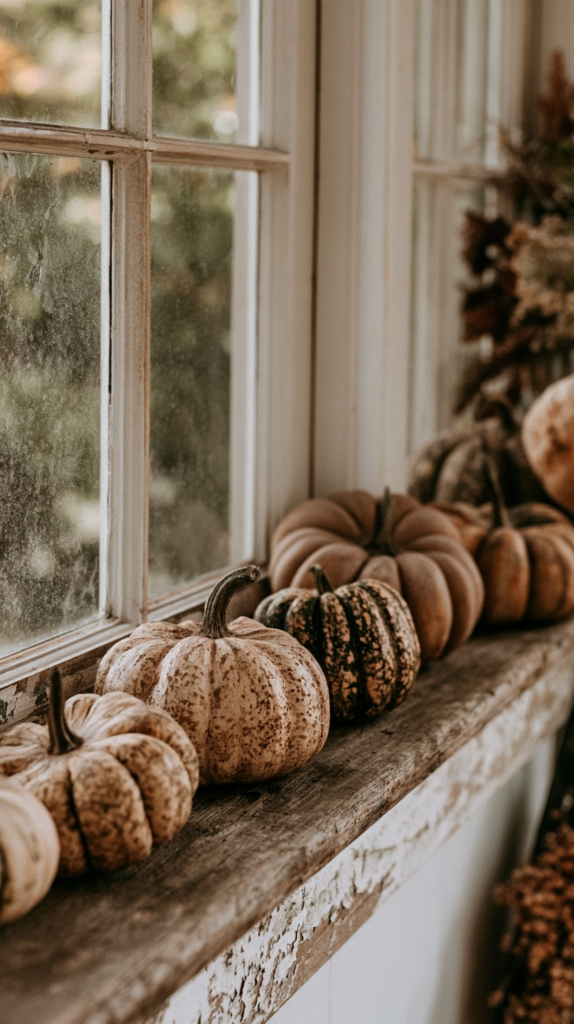
Gourds were grown as storage vessels long before they were decor, dried hard and hollowed out to hold seed, salt, and water.
Gather the smallest ones into a witchy fall centerpiece, or let them sit in a single row on the sill and shrivel slowly through November.
The slow collapse is part of the season, not a failure of the display. Old households watched food change all winter and understood it as a clock.

New from Wild Enchantment
Your Enchanted Home Starts Here
A 25-page guide to creating a witchy, nature-inspired home using thrift stores, budget finds, and what you already own.
8. Tuck Rosemary and Rue Above the Doorframe
Protective herbs were hung at entrances, over beds, and behind mirrors, then refreshed at every turn of the wheel.
Tie small bundles with plain twine and wedge them where the wall meets the frame. You will catch rosemary every time the door swings open.
Replace them at the equinox and burn the old bundles. The refreshing was always as much of the practice as the hanging.
9. Keep a Broom Standing by the Threshold
The besom by the door was for sweeping stale energy out of a room, not dirt off a floor. It stood bristles up, and traditionally it never left the house it belonged to.
A worn wooden broom leaned against the entry wall is one of the simplest primitive pieces you can own, and one of the least expensive to find secondhand.
Sweep from the back of the house toward the front door once a month. It takes four minutes and it changes how a room feels.

10. Layer Worn Wood as Risers and Surfaces
Old cutting boards, bread boards, crates, and stump slices give you height and texture without introducing anything new to the room.
Stack them under candles, jars, and gourds so your vignettes have levels instead of sitting flat.
Exposed grain, knife scars, and dark patina are the entire aesthetic. Never sand them smooth.
11. Set a Plate at the Hearth for the Ancestors
As the veil thinned toward Samhain, a portion of the evening meal was left out for the dead, usually near the fire where the household gathered.
Bread, an apple, a small pour of cider. Some people keep this on a rustic fall altar with foraged finds already gathered there, and some just use the mantel or the top of the dresser.
Clear it in the morning and set it out fresh. The steadiness is what makes it a practice rather than a decoration.
Letting the Season Do the Work
None of this requires a shopping trip or a styling budget. Primitive autumn decor asks you to look harder at what is already worn, already growing, or already sitting in a drawer.
Hang one thing this week and notice how the room shifts around it. The rest tends to gather on its own, the way it always did.