This post may contain affiliate links, including those from Amazon Associates. If you make a purchase through these links, I may earn a commission at no additional cost to you. Learn more about our affiliate policy.
There is a rhythm older than any calendar on your wall, and some part of you already keeps it. You feel it when the light thins in September and something in you wants to gather, or when the first warm evening of May pulls you outside for no reason you could name.
The wheel of the year gives that feeling its old names back. It is a circle of eight holidays, four you already know as the solstices and equinoxes, and four quieter ones resting between them, and you do not need a single new belief to follow it.
In This Post, You’ll Find
- The wheel of the year explained in plain, welcoming language
- All eight holidays and when each one falls
- What every turning has always meant, long before it had hashtags
- One simple, free way to mark each holiday in an ordinary week
- How the wheel fits a real life with a job, a budget, and limited energy
What Is the Wheel of the Year?
The wheel of the year is the old seasonal calendar, drawn as a circle instead of a line. Its eight points sit roughly six to seven weeks apart, so there is always another turning within reach.
Four points are astronomical: the two solstices and the two equinoxes, marked by the sun itself. The other four are the cross-quarter holidays, the midpoints between them, kept by farming and hearth cultures for thousands of years.
Nothing about following it requires ceremony, supplies, or a particular path. It only asks you to notice what the season is already doing, which is a quiet form of slow seasonal living your body remembers even when your schedule forgets.
Think of the eight points as compass markers rather than obligations. Some years you will keep all of them, and some years only two or three, and the wheel keeps turning gladly either way.
The Autumn Equinox
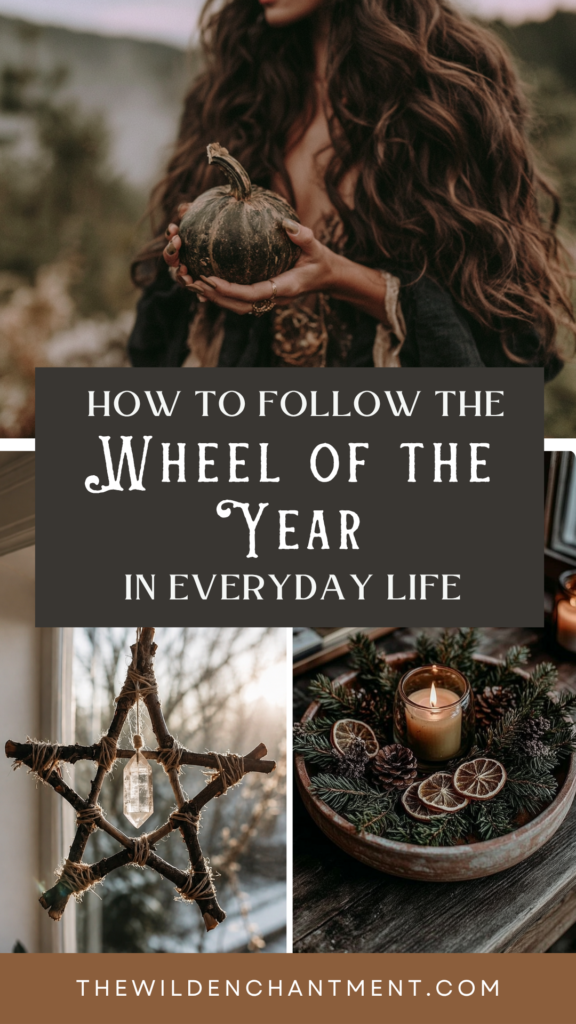
Late September, when day and night stand perfectly equal before the dark half of the year begins. The sun crosses into Libra, the sign of the scales, and the old calendars called this the second harvest.
This is the year’s pause, the moment to look at what came in and what is turning.
One simple way to mark it: take a slow walk and bring home one thing still giving, like a seed head, and one thing turning, like a fallen leaf.
Set them side by side on a windowsill, or go further and build a rustic fall altar with foraged finds, or one of these fall equinox craft for a witchy craft night.
Samhain
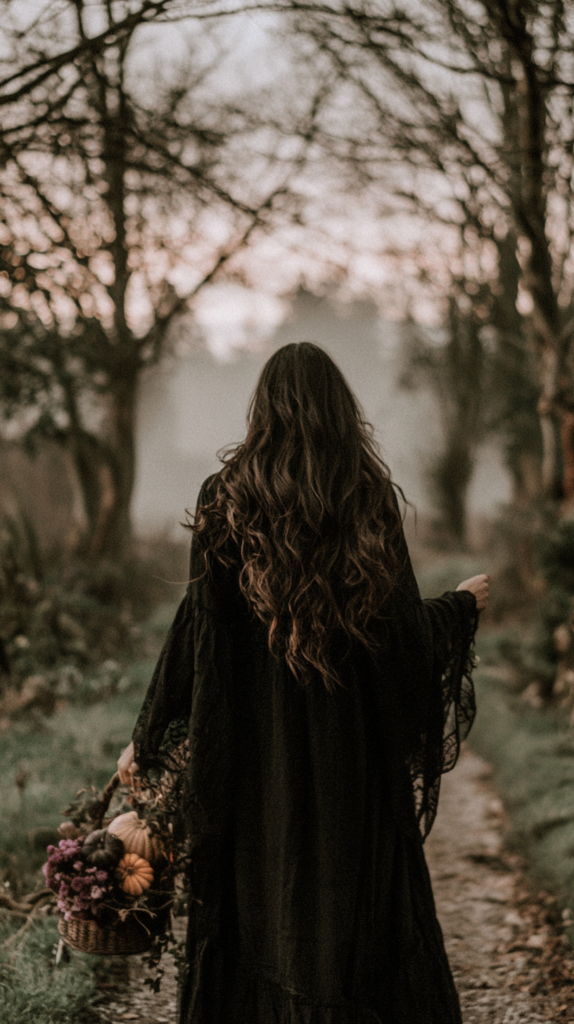
October 31st, the midpoint between the autumn equinox and the winter solstice, and the ancient festival Halloween grew from. This was the final harvest and the night of remembrance, when the year’s veil was said to thin.
Samhain is not about fright. It is about honoring what and who came before you.
One simple way to mark it: light a candle at a window after dark and say the name of someone you miss, out loud, just once.
The Winter Solstice
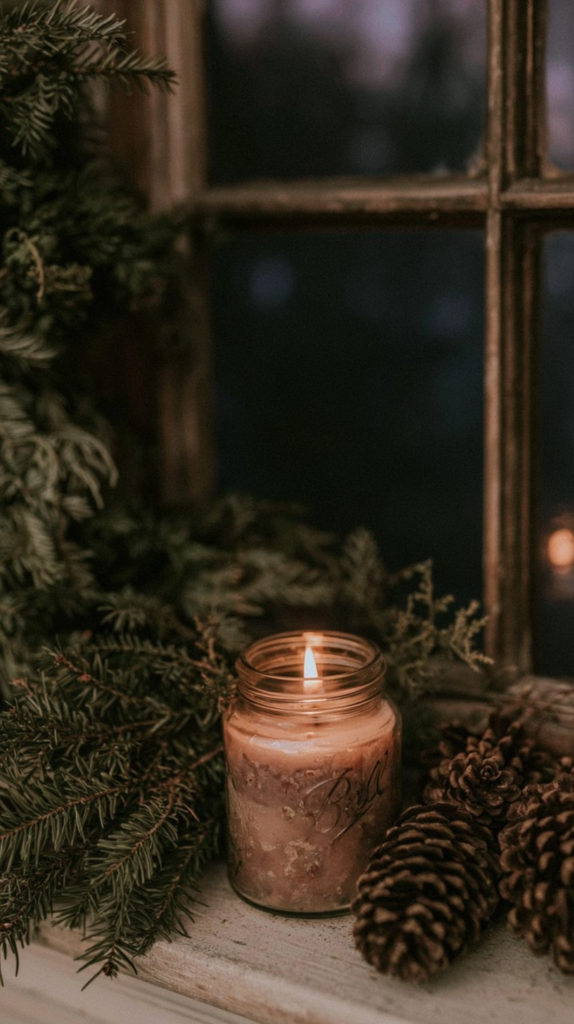
Late December, the longest night of the year and the still point where the light begins its return. The old ways kept this night with fires and vigils, tending a small flame as proof the sun comes back.
You need nothing but one candle and an unhurried evening. Light it at dusk, leave the overhead lights off, and let whatever you do that night happen beside it.
If the night calls for more, there are gentle winter solstice ritual ideas that stay just this simple. You can also make these winter solstice salt dough ornaments to mark turning.
Imbolc
February 1st, the quiet midpoint between the solstice and spring. The world still looks asleep, but the light is stretching noticeably longer, sap is rising unseen, and seeds are waking underground.
Imbolc honors everything stirring beneath the surface, including whatever is stirring in you.
One simple way to mark it: cut a few bare branches on a walk, bring them inside to a jar of water, and watch them wake into leaf weeks ahead of the world.
The Spring Equinox

Late March, when day and night balance again and the light finally wins. The sun enters Aries, the first sign of the zodiac, and the whole year begins its growing half.
This is the season of beginnings you cannot yet see the end of. Plant a few seeds in a cup of soil on the windowsill, naming what each one stands for, or shape the evening into your own spring equinox ritual for renewal. You can also make one of these spring equinox nature crafts to mark the beginning of the wheel.
Beltane
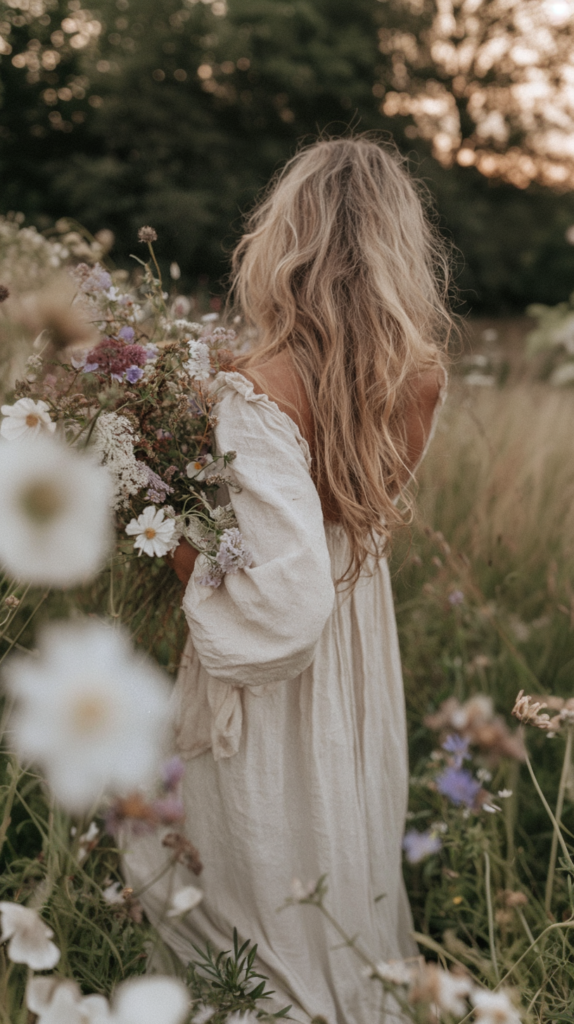
May 1st, the midpoint between spring and summer, when the green world reaches its first full exuberance. The old calendars lit fires on the hills for this one, celebrating vitality and the sun visibly winning.
Where Imbolc whispers, Beltane sings.
One simple way to mark it: gather flowers or leafy stems on the day itself, more than you need, and put them somewhere you will pass constantly. Abundance is the whole point.
The Summer Solstice
Late June, the longest day, when the sun seems to stand still at its height. Midsummer asks something deceptively hard: notice the fullness while you are standing inside it.
Mark it by giving the long evening your full attention. Sit outside as the light finally goes, without filling the time, or spend the golden hour on simple summer solstice nature crafts made from whatever the season hands you.
New from Wild Enchantment
Wheel Of The Year Gathering
8 nature crafts & seasonal rituals for each turning of the year, using what the season is already giving you.
Lughnasadh
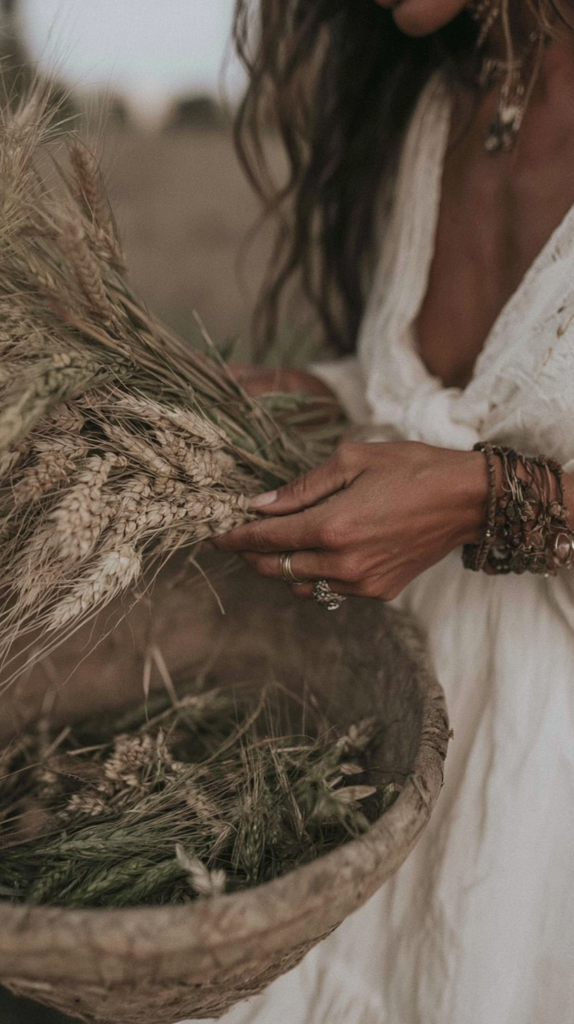
August 1st, the first of the three harvest festivals, when the earliest returns of the year’s work arrive. The old tradition here is beautiful: honor the effort while it is still underway, not only when everything is finished.
One simple way to mark it: bake or buy a good loaf of bread and eat the first slice slowly, naming one thing you have worked toward this year that is already bearing fruit.
A Year of Turnings
Read back through those eight and notice what none of them required. No supplies beyond a candle and what the season drops at your feet.
There is no performance in any of it, no group, and no fluency in anyone else’s vocabulary.
The wheel was never meant to be another thing you fail at keeping up with. It is the oldest rhythm there is, and following it mostly means remembering to look up every six weeks or so.
Start with whichever turning comes next. There is no beginning on a circle, so you are never behind, and the season outside your window is already halfway to meeting you.
Your hands and your attention are the only tools this asks for. Everything else, the light, the branches, the bread, the first fallen leaf, is already on its way to you.
From Wild Enchantment
Sell What Your Hands Create
The complete companion for turning your handmade crafts into real income at markets and online. What to make, what to charge, and where to sell it.
Get the Kit